Mostrando entradas con la etiqueta Insurance. Mostrar todas las entradas

By Joni Gray
Most Reliable Car Brands
Consumer Reports recently announced the results of the top ten car brands, putting Toyota squarely at the top with its Scion, Toyota, and Lexus brands in the top three spots. Next were four other Japanese companies – Mazda, Subaru, Honda, and Acura. Also on the list of the top ten was the only German company listed, Audi. Kia was the only one Korean company to make the top ten, and no American brands were represented on the top list.
Of the American brands, General Motors had the biggest gain in reliability with Cadillac brand taking 11th place in the study.
 Most Reliable Car
The subcompact Toyota Prius C earned the top reliability rating overall – however, Consumer Reports’ testing did not put that particular model in their “recommended” list. The company is both applauded and criticized for its objectivity due to the way it tests cars, refrigerators, vacuums, and other products. They buy one product from a retailer and put it through a bastion of testing to measure not only reliability, but satisfaction and comparative features.
The 2012 Toyota Prius C (Source: Toyota)
How CR Measured Reliability
In the case of these new car reliability ratings, the goal of the survey is to discover how each model is likely to hold up after a year of use. Basically, consumers are asked which problems and repairs they have experienced in one year of ownership. If the model has been unchanged for any other years of its life cycle, its past track record is also measured. Since it’s a “prediction” of sorts, there has to be at least one year of history reported by the owner, so brand new models that are built from the ground up don’t count into the survey results until next year.
Consumer Reports weighs each individual issue differently by how severe it considers the individual issue. For instance, a major engine problem is weighed quite a bit higher than a glitch in the audio system. By contrast, J.D. Power and Associates’ Initial Quality Study (IQS) measures all problems found in the first three months of ownership as equal in weight.
The Bottom of the List
The most notable fail on the bottom of the list is Ford, which only a few years ago, dominated the top of the list. The brand had issues with drivability in its PowerShift transmission and the MyFordTouch infotainment system, which had been cited for failing while in use and being difficult to use. Only two years ago, Ford was the most reliable of the American brands in the study; however, Ford had three new models that were too new to qualify for this survey – the 2013 Ford Escape and Fusion and the Lincoln MKZ.
From first being best to 27th being worst, here’s how Consumer Reports ranked car brands for reliability:
1. Scion: 72% above average
2. Toyota: 47%
3. Lexus: 47%
4. Mazda: 40%
5. Subaru: 37%
6. Honda: 36%
7. Acura: 26%
8. Audi: 16%
9. Infiniti: 14%
10 Kia: 11%
11. Cadillac: 10%
12. GMC: 6%
13. Nissan: 5%
14. Mercedes-Benz: 4%
15. Chevrolet: 3%
16. BMW: -2%
17. Hyundai: -3%
18. Volkswagen: -9%
19. Jeep: -12%
20. Volvo: -14%
21. Buick: -29%
22. Mini: -42%
23. Chrysler: -43%
24. Dodge: -46%
25. Ram: -55%
26. Lincoln: -58%
27. Ford: -59%
28. Jaguar: -141%
A self-driving Ford Focus spotted in Mountain View, Calif., is one of Google’s employee cars currently in testing. (Photo credit: Flickr: Mark Doliner)
Thanks to the folks at Google, self-driving cars are the next technology that will change the world. The average driver may not be ready to turn the wheel over to a robot car, but the U.S. government and many car companies are taking this technology very seriously.
David Strickland, the head of the National Highway Traffic Safety Administration, believes that, although these cars may not be commonplace on the road for another decade, they would eliminate a huge factor responsible for 90% of traffic deaths — human error.
“We have the chance of saving thousands and thousands of lives as cars in use today are replaced with automated vehicles,” Strickland said.
With NHTSA in the national seat for creating automotive safety standards, the question is, are they ready to re-write the book of the rules of the road to include completely autonomous cars? Strickland would not say while speaking on the topic at a recent industry gathering in Washington.
“Setting such standards would require the government to fundamentally rethink the way it evaluates auto safety,” he said.
This is only a test
What that would involve is testing several cars that can each communicate with each other — which is just what the government is doing in a massive, year-long road test that started this summer in Ann Arbor, Mich.
The road test, conducted by the University of Michigan’s Transportation Research Institute, uses 3,000 cars, trucks, and buses set up with V2V (vehicle-to-vehicle) technology. These vehicles were donated by many of the car companies developing this future technology and include Ford and GM.
A goal of the testing is for regulators to be directly involved in setting industry standards to make sure that each type of technology can communicate with another in an open system.
The companies known to be already testing robotic cars include GM, Ford, Mercedes-Benz, Volkswagen, Audi, BMW, Volvo, and Cadillac. But the technology that started this craze began in 2005, when a professor named Sebastian Thrun and his Stanford team won a contest called the 2005 DARPA Grand Challenge. The vehicle they created successfully traveled 132 miles across the desert.
Since then, Thrun has headed up a three-year partnership with Google Maps and has driven more than 300,000 miles in its many autonomous vehicles. Google has also been a driver of the government’s involvement and its lobbyists have convinced Florida, Nevada, and California to make self-driving cars legal for testing. Next in line are Hawaii, New Jersey, Oklahoma, and Washington, D.C.
Critics have valid points
But as the wonders of the technology are being lauded, others are concerned about the implications of this brave new world. The legal implications of accidents, liability, and integrating self- and non-self drivers on the road, have some legislators worried. Some traffic laws for motor vehicles have been on the books for 100 years, meaning new laws would have to be created from the ground up.
Other naysayers include consumer groups who fear that companies like Google and major auto manufacturers will use data they collect via GPS, radar, and computer vision techniques for marketing purposes.
The biggest hurdle will, of course, be consumer willingness to turn over the wheel to a computer-based system. With technology advancing as fast as the speed of light, we may be ready in another 10 years. One thing is certain — our government has taken the stance of encouraging this behavior to further the cause of safety. So in reality, the road from horseless carriages to driverless vehicles may be much closer than we think.
A survey says many teens are “completely clueless” when it comes to car maintenance. (Photo credit: Flickr Creative Commons: Joseph Gilbert)

When teenagers (ages 16 - 20) have their own cars, the danger of them crashing it are 2 and 1/2 times more likely than the teens who used the “family car.” So those priviledged few teens who are responsible for their own car should also consider themselves warned — things can go wrong and you can avoid many dangers by learning good maintenace habits.
Yes, teens have much to learn about keeping safely out of a crash, but a recent survey shows that young drivers know even less about car maintenance. According to a recent survey conducted by the Centers for Disease Control and Prevention, two-thirds of teens are rated by their parents as “somewhat or completely clueless” when it comes to how to take care of their car.
This spurred the folks at AutoMD.com to put together six tips for teens (and parents) to keep their cars running well with the ultimate goal for staying safe on the road.
  1. Know your car’s maintenance intervals and keep up with service.
    Look at your owner’s manual and find the car’s required maintenance schedule. This tells you when to have the fluids, tires, brakes, and oil and filter changes.
  2. Take care of your tires — make sure they can get you to school, work, etc.
    Keep your tires properly inflated and watch for tire wear. Consult your owner’s manual or tire sticker on the door jamb for manufacturer-recommended tire pressure settings. Also, look at your tires for wear and tear every time you stop for gas.
  3. Don’t ignore dashboard warning lights
    Dashboard warning lights serve as notification that something may be wrong with your car. The warnings include Check Engine, Oil, Temperature, Brake, Tire sensors and more, depending on the car’s technology. Read the owner’s manual and pay close attention to the lights, what they mean, and how you should respond to them.
  4. Don’t let your car run too low, or out of gas
    Like food, your car needs fuel to survive. Today’s cars are not made to run all the way to the last drop, as many have fuel-injected engines that use gas to cool and lubricate their components. A good rule of thumb is to keep the fuel level above a quarter tank to keep your car running well, and to avoid being stranded on the side of the road.
  5. Steer clear — take care of your windshield
    The windshield is like the eye of your car. Therefore, it is critical to keep it clean and clear for safe driving. Wiper blades that have cracks or that skip, streak, or leave smears should be replaced. You should also check spray nozzles for proper aim. If the nozzles are clogged, clean them with a needle.
  6. Teen life moves fast, but your car doesn’t have to.
    Slow down and avoid speeding. It may seem fun to drive fast, or you may be running late to school, but the best way to keep your car well maintained and safe on the road is to avoid speeding. Speeding is not only dangerous, but it’s bad for your car too. Driving slower puts less demand on your car’s engine and transmission, and also helps to reduce the amount of gas you use in the process. Avoid all driving habits that put stress and strain on your vehicle.
Teen training is only the beginning of a lifetime of good safety habits. To get further information, AutoMD.com has made a Teen Drive Car Maintenance and Repair Guideavailable on its site where your teen can take a maintenance and repair quiz and sign a certificate of commitment with their parent or guardian.
Preparing the teenage driver to be aware of his or her car’s condition can prevent many a mishap from ever happening at all. And if you have teenage kids, you have enough to worry about without having to add a flat tire, broken down vehicle, or a car stranded on the road to the list.


On the eve of the Los Angeles Auto Show, GM announced three user-friendly infotainment products that may well give Ford a few headaches. Available soon on some of Chevrolet’s most affordable cars, there’s an integrated and inexpensive navigation iPhone app, Siri EyesFree interface, and an upgraded version of Chevrolet’s MyLink that includes an Apple-like customized screen design.
For a solid five years now, GM has watched Ford gain sales and goodwill based on two things. One, it did not take the government bailout money in 2008 and, two, Ford has successfully marketed its in-car connectivity in its lower-end, more affordable cars. Marketing executives at both brands have fired verbal shots across their respective bows via the automotive press, downright bad-mouthing one another in the war to win back the nation’s confidence in American car brands.
And after Ford spent years touting its technology to win over young buyers, its quality ratings dipped for the past two years of J.D. Power and Associate’s Initial Quality Survey (IQS). The complaints were centered on its MyFordTouch system that controls the entertainment and climate systems in Ford and Lincoln vehicles. Complaints covered everything from a confusing interface, to unresponsive voice commands, to the fear that the system distracted them while driving. The resulting IQS score sank Ford in the rankings from No. 7 to a low No. 28.
Although this has been a setback, it has not slowed down Ford’s technology push one bit. Jim Farley, Ford’s group vice president for global marketing, told Automotive News that the Ford brand has hung its hat on its connectivity.
“Technology is one of the main reasons why people see us differently now today than they did just a few years ago,” Farley said. So it was only a matter of time until GM caught up.
GM infotainment goes for mainstream acceptance
Not to be outdone, the largest American carmaker is attempting a “leap-frog” of technology offerings via its dominant Chevrolet brand.  Its three new technology applications will begin to appear on Chevrolet vehicles coming to market in 2013.
In theory, these systems are right in the pocket of a generation who have Steve Jobs as a role model and Apple iPhones in their pockets. Time will tell if the products prove to be easier to operate than Ford’s current systems, but GM has certainly made some milestone moves with these three approaches to bringing technology into the car, making the solutions more familiar to a mobile generation.

Chevrolet Spark BringGo App (GM)
BringGo App
GM is doing for its tiny Spark microcar what no other brand has done successfully yet — making an inexpensive navigation app from your phone work on the car’s system. The app costs $50 (one-time only) and the mapping data is downloaded from the app, so you’re not using up your data plan. The system will work only with an iPhone and the Chevrolet Spark LT that includes MyLink, which costs $14,495, but the BringGo app has many of the features you’d find in an embedded navigation system:
  • Emergency information such as police, fire, and the nearest hospital
  • Thousands of points of interest, such as the nearest department store, type of restaurant, repair shop, etc.
  • Local Search via Google
  • Where am I? locator
  • Live traffic functionality provides crash reports and lane closures, and alternative routes 3-D maps
  • Ability to calculate remaining miles of range
  • Ability to store native maps to the customer’s smartphone, giving them access to locations and turn-by-turn directions even when phone signal quality is poor. Many GPS-enabled apps do not do this.
Siri EyesFree System (GM)
Siri EyesFree
If you know Siri from using an Apple iPhone, you know that she will help you if she can, and if not, she’ll point you to a Google search that might do the trick. These truths have been forever etched into our culture, which is why GM has teamed up with Apple to create a voice-activated interface for its upcoming Chevrolet Spark and Sonic. The phone is connected to your car via a Bluetooth connection, and you never need look at your phone while driving — even the light won’t go on while you’re asking Siri a question with the use of a button on the steering wheel.
Here’s what Siri in your Chevy Spark or Sonic can do:
  • Make voice-activated, hands-free calls to contacts on your iPhone
  • Play songs in the iTunes library, and even switch music sources automatically from AM/FM/XM radio to iPod mode
  • Listen to, compose, and send text messages to a phone number or anyone in saved contacts
  • Access your calendar and add appointments
  • Minimize distraction by keeping the screen of the iPhone from lighting up, even when Siri answers simple questions, such as game scores or the dates of national holidays

Chevrolet MyLink System (GM)
Chevrolet’s Next Generation MyLink
We won’t see this new system until the 2014 Chevrolet Impala comes out in the Spring of 2013, then later on GM trucks, SUVs, and the Corvette, but the new generation of MyLink will offer:
  • Chevrolet’s first natural voice recognition for all commands — no key phrases to learn
  • Four screens that change the 8-inch appearance based on your personal preference: Contemporary (clean, simple), Edge (the youth), Velocity (car guys), Main Street (average Joe/Jane).
  • Ability to link up to 10 technology devices (think phones, Bluetooth, MP3 players, USB drives, etc.)
  • A screen that “swipes, clicks, and drags” like an Apple product.
GM’s approach to all this new technology was to find out what people could handle first, then have designers build simple solutions that mimic the software that has already found its way into the people’s consciousness. The key was to take engineers out of the design process. The result is to mimic Apple’s simplistic icon design and interface. Not a bad strategy when you consider that Apple is the most valuable public technology company in history.
So get ready to start seeing a major advertising push featuring these technologies from Chevrolet. With the goals of both safety and connectivity in mind, it’s a pretty compelling message.
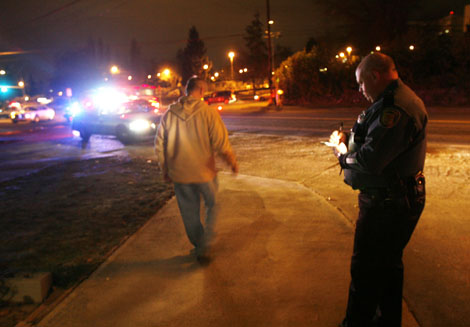
Extremely toxic drivers, such as those convicted of driving under the influence of drugs or alcohol, may make an exclusion a necessity.
Extremely toxic drivers, such as those convicted of driving under the influence of drugs or alcohol, may make an exclusion a necessity. (image by seattlepi.com)
As one’s household grows, so too, does their auto insurance policy. While this is a pretty standard and expected occurrence, it’s important for people with an increasing number of licensed drivers under one roof to realize they have options. Should any of their family members threaten their driving reputation and quotes, policyholders have the option to remove and exclude them from their insurance plans, making auto coverage someone else’s problem and responsibility.

REQUESTING AN EXCLUSION

If you’re a policyholder interested in excluding one or more individuals from your policy, then you need to contact your insurance company and/or agent. Your request will have to be in writing and might also come with additional forms and paperwork, depending on who your insurance company is. It’s also important to note that requesting an exclusion may cause your rates to increase a bit, but some view this cost as a much more affordable expense than the potential damages they might be held accountable for when the dangerous driver(s) in question get in a serious accident or have repeated traffic offenses.

Whom Should I Exclude?

Now that you know how to request an exclusion, it’s important to understand WHO to exclude. You should exclude anyone you see as high-risk, unreliable and irresponsible. Individuals who show no regard for rules and regulations and could care less what happens to your name and record in the process are other obvious options. To help make the choice easier for you, below is a list of three individuals you definitely don’t want on your policy.

Mittens, the Family Cat

While a fluffy, cute member of the family, Mittens also has a wild side with which you are all too familiar. She is open about her late-night romps with her neighborhood friends, often coming home as the sun rises. She’s practically nocturnal! Those crazy hours coupled with her sassy attitude are a recipe for disaster for you and your record, so nip this problem in the bud while you still can — before Mittens brings you down with her.

Your Six-year-old Who’s Going on Sixteen

Six-year-old Ben is your pride and joy. He’s cute and sweet, but let’s be honest — the boy is growing up too fast. Rather than run the risk of him growing up, stealing your car and running away, it’s probably best to exclude him from your policy to keep that from happening. You might not be able to stop him from physically growing, but you will darn sure try to stop him from leaving you!

The Neighbor Next Door Who Thinks He’s ALWAYS Welcome

Sure you let him borrow a cup a sugar once, but does that really warrant unannounced pop-ins or the dreaded ‘surprise I was waiting for you to get home from work’ visit? The answer is obviously no, but that doesn’t stop your too-close-for-comfort neighbor from doing just that and more. A sweet, eager individual with no concept of social norms, this neighbor is here so often you’re worried he thinks he’s actually a part of the family. While you technically shouldn’t have to cover him on your insurance, the lines that surround your whole relationship — and evidently your property— have been blurred. So, just to be on the safe side, you better exclude him. Who knows, maybe one day he’ll get really comfortable and decide to take your car for a spin and get locked up for grand theft auto — maybe then at least you’ll get to cook in peace again!

Reality Check

Obviously, these examples of potential exclusions are extreme and ridiculous, but that’s just the point. Auto insurance exclusions are a serious issue that should be treated as such. They shouldn’t be added to policies willy-nilly and on a whim, but rather after serious thought and consideration has been given to the situation. It can be a pricey and potentially lengthy process that should only be implemented after you have determined there is no other feasible option.
You should only opt to exclude drivers with repeated violations such as driving under the influence of alcohol or drugs, speeding or any other behavior that shows a disregard for the law. It’s also important to note that exclusions can also apply to non-related roommates. Depending on your policy and location, it might be a smart idea to exclude any irresponsible roommates you might have, should they try to drive your vehicle without permission and thus endanger your reputation and record.
We do hope you’re never presented with having to exclude a family member from your auto policy. Keep in mind, it’s only advisable when the said-driver is extremely toxic. Most of the time, excluding a single driver will only lead to higher rates for everyone involved.
You’ll know they are a real risk if they cause you to be subjected to higher rates, or worse, put you in danger of losing your coverage altogether — those are costly expenses worth the fees that come along with an exclusion.
If you are seriously considering opting for an exclusion, talk with your insurer to explore all of your options and alternatives. They should help point you in the right direction for your future.